
Coached by AI: Why I’m Trusting Artificial Intelligence to Train Me for an Ultramarathon
First of all, welcome to my blog. This is the first of what I hope will be a continuous stream of posts as I build up to running an ultramarathon while using AI to help me train. Please do read on for more on the why, what, and everything else!
The curiosity that started these shenanigans
I guess every runner has their why. And every runner is likely to have a question around “How fast can I go?” or “How far can I go?”.
For me though, the question I had was “Can AI, like ChatGPT, help me train for an ultramarathon?”
It’s a little bit out there, right? I suppose the answers are already out there. AI is used in many coaching apps on our phones these days. But I didn’t want to spend additional money on an app that I couldn’t REALLY tailor to my needs. They generate plans based on a set of criteria and aren’t interactive. You can’t have a conversation with them and tell them what’s going on. They don’t have a name, and they can’t adapt easily.
You may think – well, why not go and get a real-life human coach? But they cost more depending on the plan you want. They aren’t always available in real-time, and they have their own style of coaching that you may not get on with.
From the first half to running 100 miles
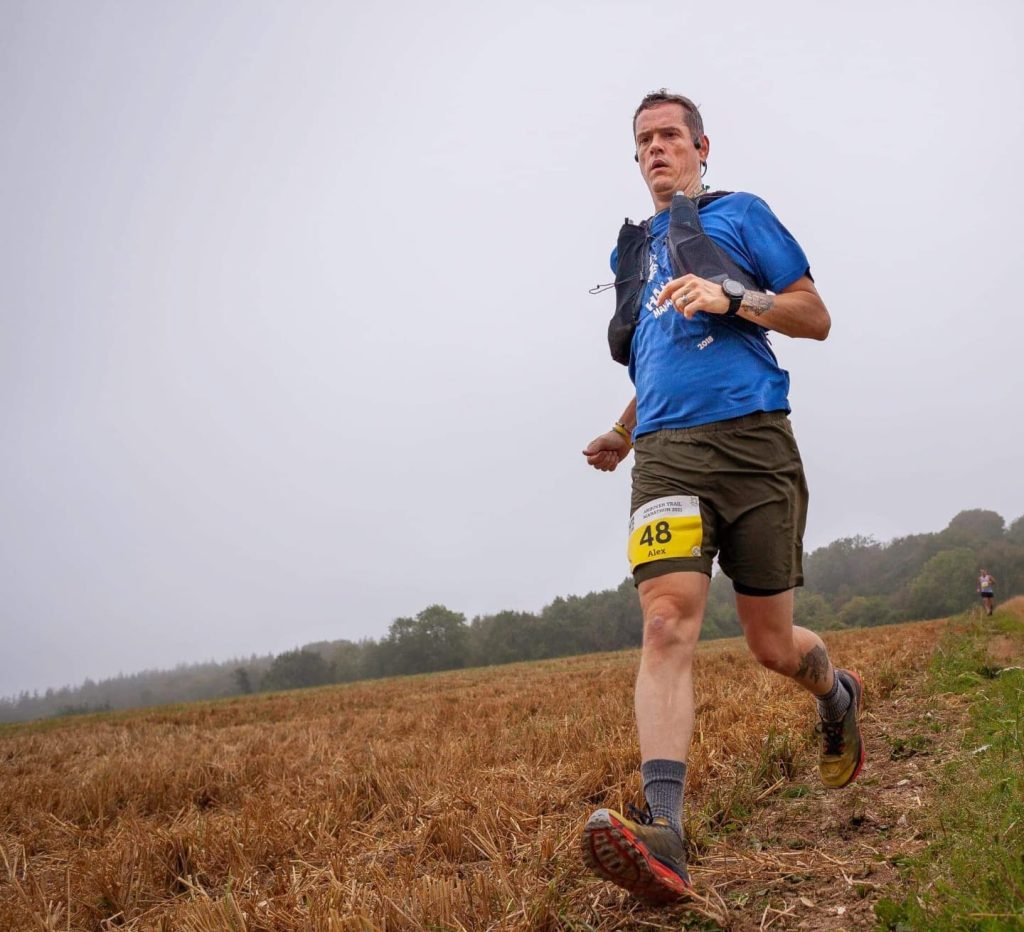
My running journey is probably not too different from yours – although it may not include running an ultramarathon.
I left the military in 2014, and after a year of working in London, I had gained a lot of weight. So, how to deal with it? Like any normal person, right? A New Year’s Eve agreement with a friend, and we were signing up for our first half-marathon (we weren’t [that] drunk, I promise!)
One thing led to another, and by the time of writing, I had tried it all (apart from running 200+ miles – honestly, who is THAT crazy!?)
Along the way, I’m proud of some of the things I have achieved. They aren’t superhero achievements, and I am by no means an elite runner; however, over the years, I have:
- Ran a sub-20-minute 5k
- Have a 1hr 34-minute half-marathon PB
- Gone sub 9hrs over 50 miles of the South Downs Way
- Achieved a coveted 100 miles – 1 Day buckle
Tough times and even tougher miles
Over recent years, it’s become increasingly hard to motivate myself to get out the door despite desperately wanting to do so. At first, I thought it was depression; the symptoms certainly were pointing that way, but further testing revealed I had low testosterone. Since starting TRT, I’m hopeful that, with renewed energy levels, I can start to train and race to my full ability again.
This shift, combined with the curiosity of AI, made it the perfect time to try something new.
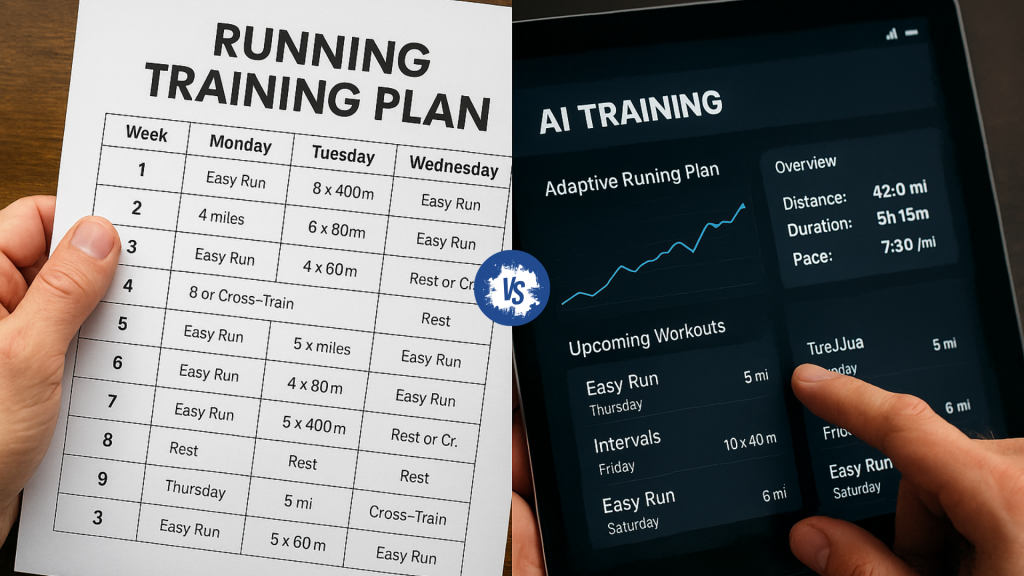
Why AI Coaching?
Most training plans are cookie-cutter — great in theory, but they don’t account for real life:
A kid’s birthday party that clashes with your long run.
A stressful week at work that drains your energy.
Or just those days when you’re not at your best.
Getting a real-life human coach can solve those problems, but requires you to pay for their input. Some coaches offer different packages depending on what you are willing to pay them. Yes, you get their years of experience. Yes, the good ones will help improve your running; sometimes they even turn up at your races or pace you because your friends think you’re too crazy. But not all coaches can train you to run an ultramarathon!
And look, please don’t think I’m not against having a coach – In fact, I have had one in the past, and it worked reasonably well for me, but…
AI, on the other hand, promises something different:
Adaptability: it can adjust sessions in real time based on my progress, fatigue, or missed runs.
Personalisation: it can draw from countless training methods, not just a single philosophy.
Affordability: I get a plan tailored to me without the ongoing costs of a human coach.
So there it is. A commitment to using AI to help me train for my next big run. The Thames Path 100 miler in 2026. That gives me, at the time of writing this post, approximately 214 days to test if this is going to work or not. Over the coming months, I’ll be documenting this journey — the good, the bad, and the sore legs. I’ll share what it’s like being coached by AI, how my training adapts, what I learn about myself along the way, and maybe even which gear helps me survive the miles.
So if you’re curious about whether this is going to work or not, or if you’re just interested in what it’s like to train for and run an ultra, then why not stick around? Comment, share your thoughts, or follow me on Strava, and let’s see if AI really can coach an average runner like me to ultramarathon success.